
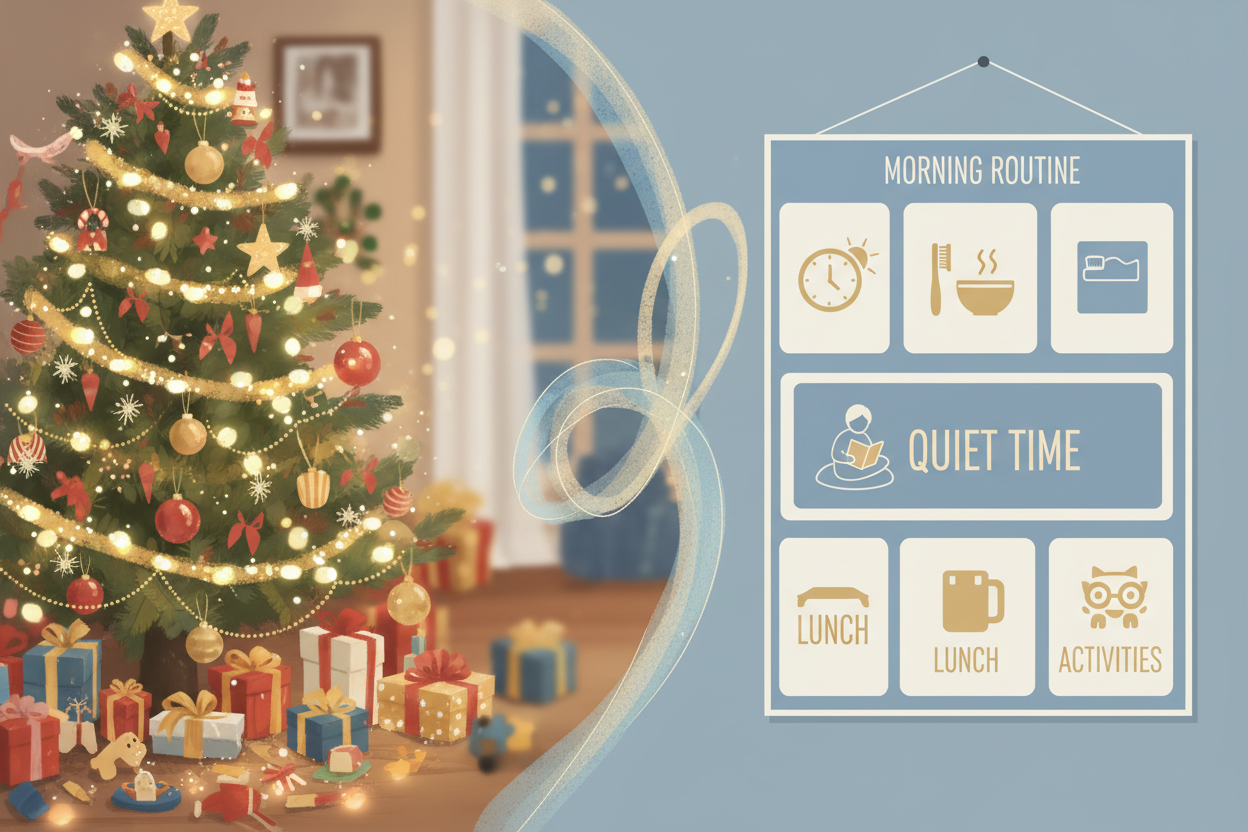

The malls in Kuala Lumpur have been playing Mariah Carey since November. The decorations at Pavilion are towering and sparkling. The invites for Christmas Eve dinners are rolling in.
For most children, Christmas is synonymous with magic, excitement, and the thrill of the unknown. What is in the box? Who is coming over? Can we stay up late?
But for a child with autism, the very things that make Christmas "magical" for others can make it terrifying for them.
Christmas is, by definition, the Great Disrupter of Routine.
The furniture is moved to make room for a tree. The house smells different (pine candles or roasting turkey). The lights are flashing. And worst of all: The Surprise.
If you find your anxiety rising as December 25th approaches, you are not a "Grinch." You are a parent protecting a child who thrives on predictability in a season that celebrates chaos.
Here is why the holiday hits differently for our kids, and how to navigate it.
1. The "Invader" in the Living Room (Sensory Change)
Imagine coming home one day to find a giant, prickly, flashing bush in the middle of your living room. Your favorite chair has been moved. The safe, predictable space where you decompress is gone.
For a neurotypical child, a Christmas tree is festive. For an autistic child, it can be a visual assault and an invasion of their sanctuary.
The Strategy:
-
Slow Roll-Out: Don't decorate the whole house overnight while they sleep. Let them watch (or help) put up the tree over a few days so they process the change gradually.
-
Static Lights Only: Flashing or twinkling lights are a common seizure trigger and can cause rapid sensory overload. Stick to warm, steady-burning lights.
-
The "No-Go" Zone: Keep one room strictly decoration-free. If the living room is festive, keep their bedroom exactly the same. They need a place where it is not Christmas.
2. The Anxiety of the Wrapped Box
We are taught that "surprises are fun." But for an autistic brain that craves certainty, a wrapped box is a source of intense stress. Is it something I like? Is it loud? Will it pop out at me?
Then comes the Social Performance: The pressure to rip open the paper, look happy, make eye contact with Grandma, and say "Thank you!" even if they hate the gift inside.
The Strategy:
-
The "Un-Surprise": It is okay to tell your child exactly what is inside the box before they open it. Or, wrap the gifts in clear cellophane. Removing the anxiety of the unknown often brings back the joy of the gift itself.
-
Script the Reaction: Practice opening gifts beforehand. Teach them it is okay to just say "Thanks" and put it down. Remove the pressure to perform "overjoyed."
3. The "Roast Turkey" Texture Struggle
Christmas dinner is often a sensory nightmare. Roast turkey is dry. Stuffing is mushy. Fruit cake is... complicated.
You have spent all year getting them to eat a specific brand of nuggets or rice, and suddenly they are expected to eat Brussels sprouts and cranberry sauce because "it's tradition."
The Strategy:
-
Fed is Best: Do not make Christmas dinner the hill to die on. Feed them their safe foods before the guests arrive or let them eat their nuggets at the table while everyone else eats turkey. A hungry child is a regulated child.
-
Buffet Style: Put the food on a separate table. Let them choose what goes on their plate. Autonomy reduces anxiety.
4. The "Social Battery" Drain
Between church services, family gatherings, and visiting cousins, the social demands of December are exhausting.
In Malaysia, our gatherings are loud. Everyone talks at once, kids run screaming through the house, and well-meaning Aunties want hugs.
The Strategy:
-
The "Irish Goodbye": You do not need to be the last family to leave. Arrive early before it gets crowded, eat, say hello, and leave before the sensory overload hits.
-
The "iPad Pass": If the noise gets too much, let them retreat to a corner with their headphones and iPad. It is not "antisocial"—it is self-regulation.
Redefining the Holiday
This Christmas, give yourself permission to break tradition.
If a "perfect" Christmas means a meltdown at the dinner table, it isn't worth it. If a "happy" Christmas means your child opens one gift, eats a plate of plain fries, and watches their favorite cartoon while wearing noise-canceling headphones... then that is a successful Christmas.
Celebrate the child you have, not the holiday Hallmark told you to have.
Merry Christmas to you and your beautiful, unique family.
Disclaimer: The information provided in this article is for educational purposes only and is not intended as medical advice. Always prioritize your child's well-being over social expectations.


