
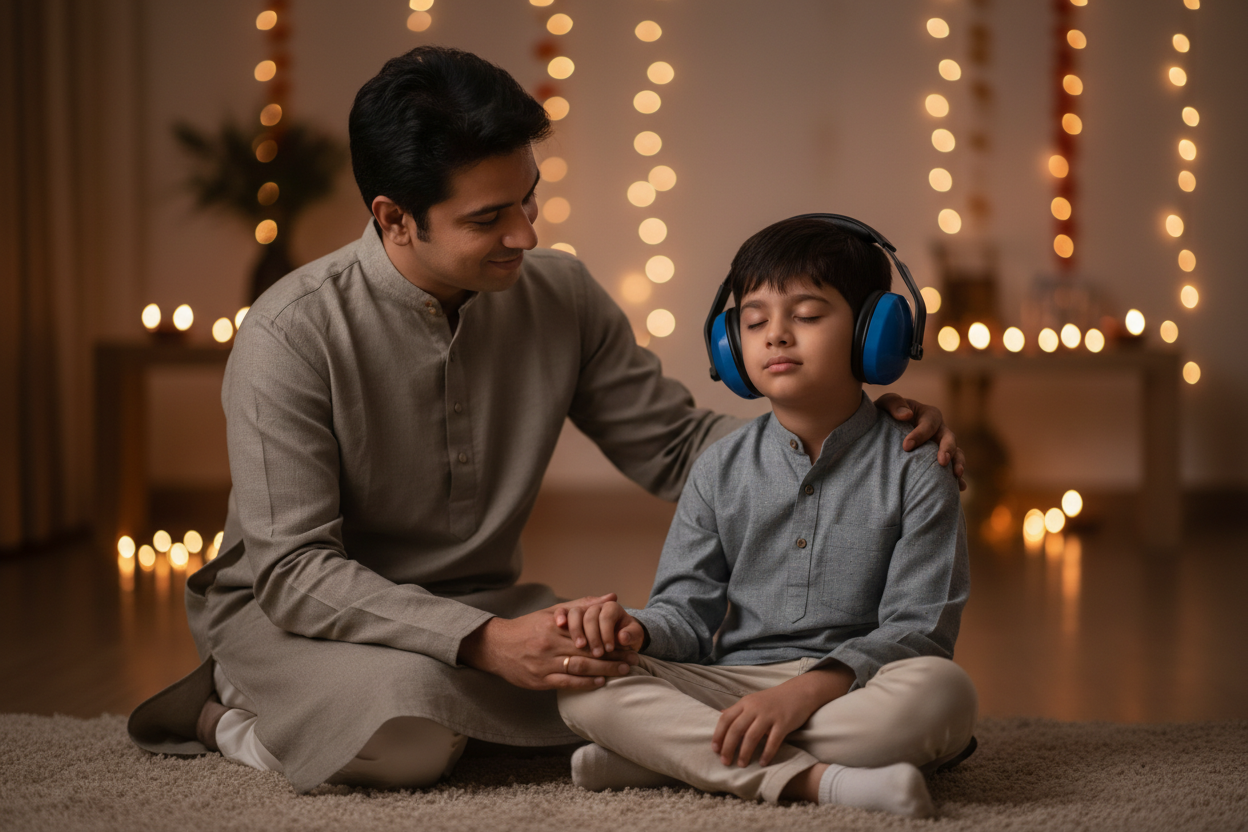

Deepavali is the Festival of Lights. It symbolizes the victory of light over darkness, good over evil.
For most Malaysian families, it is the highlight of the year—a time for thosai breakfasts, vibrant kolams, new jippa or pattu pavadai, and the joy of reuniting with family.
But for parents of children with autism, the "Festival of Lights" often feels more like a "Festival of Fright."
The anticipation isn’t just about joy; it is mixed with a knot of anxiety in the stomach. We know what is coming: the sensory assault, the disrupted routines, and the inevitable judgment from well-meaning but ignorant relatives.
If you are dreading the upcoming festivities, you are not alone. Here is why Deepavali is biologically difficult for our children, and how you can manage the chaos.
1. The "Mercun" Assault: It’s Physical Pain, Not Fear
To a neurotypical brain, the boom of a firecracker (mercun) is startling but exciting. The brain quickly categorizes the sound as "safe" and moves on.
For a child with autism or Sensory Processing Disorder (SPD), the brain’s filtering mechanism is often broken. They don't just "hear" the explosion; they feel it. The sound waves can register as physical pain.
When the neighbors start popping fireworks, your child isn’t being "difficult" or "shy." Their amygdala (the brain's threat center) has triggered a full-blown Fight or Flight response. Their heart races, their cortisol spikes, and they cover their ears to protect themselves from what feels like an attack.
The Strategy:
-
Invest in Noise-Cancelling Headphones: Don't force them to "get used to it." Give them ear defenders or quality noise-canceling headphones. Let them control the volume of their world.
-
Create a "Safe Bunker": Designate one room in the house (or the grandmother's house) as a "Quiet Zone." Heavy curtains, dim lights, and their favorite comfort object. When the noise starts, they go there—no questions asked.
2. The Sugar & Gluten Trap
Let’s be honest: Malaysian Deepavali food is delicious, but it is a minefield for the gut-brain axis.
-
Murukku & Cookies: Often loaded with gluten and artificial yellow coloring (Tartrazine), which are known triggers for hyperactivity and brain fog.
-
Laddu & Sweets: Pure sugar bombs that cause a rapid glucose spike followed by a hard crash (meltdown).
When a child eats three pieces of nei urundai and then screams an hour later, it isn't bad behavior—it's bad biology. Their brain is inflamed.
The Strategy:
-
The "Pre-Eat" Rule: Feed your child a solid, protein-rich meal before you go to an open house. If their stomach is full, they are less likely to graze on sugary snacks.
-
Bring Your Own Snacks: Pack their safe foods. It is better to be the "weird parent" who brings a Tupperware than the parent managing a meltdown in the middle of the living room.
3. The "Itchy" Clothes Battle
We all want that perfect family photo in traditional wear. But heavy silk, stiff collars, and scratchy embroidery can feel like sandpaper to a child with tactile sensitivity.
A child who is physically uncomfortable cannot emotionally regulate. If the tag is itching, they will eventually explode.
The Strategy:
-
Comfort Over Style: It is okay if they wear a soft cotton kurta instead of the heavy, scratchy one.
-
The "Photo & Change" Deal: Let them wear the fancy outfit for 10 minutes for the photo, then immediately change into their comfortable sensory-friendly clothes.
4. The "Social Auntie" Pressure
This is perhaps the hardest part. The pressure for your child to salam every uncle, make eye contact, and sit still while relatives ask, "Why is he so quiet?" or "Is he still not talking?"
The Strategy:
-
Be the Shield: You do not owe anyone an explanation. If your child cannot handle the crowd, don't force it.
-
The Exit Signal: Agree on a secret signal with your spouse. If the child is reaching their breaking point, one parent takes them for a walk or a drive. Do not wait for the meltdown to happen—leave before the cup overflows.
Celebrating Differently
Deepavali is about the triumph of light. This year, let the light be your acceptance of your child’s needs.
It is okay if your Deepavali looks different. It is okay if you leave the open house early. It is okay if your child wears headphones at the dinner table.
Protect their peace. Protect their sensory system. And in doing so, you allow them to enjoy the festival in the only way that matters: Happy, calm, and loved.
Happy Deepavali.
Disclaimer: The information provided in this article is for educational purposes only and is not intended as medical advice.


